Traumų ir skubios pagalbos centro saugumą užtikrina nuolat budintys apsaugos darbuotojai.
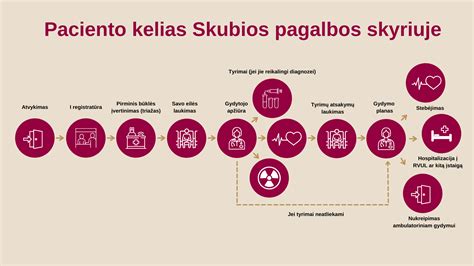
Pacientai, atvykstantys skubos tvarka konsultacijai ar hospitalizacijai su gydytojo siuntimu, gali kreiptis į Priėmimo ir skubios pagalbos skyrių visą parą.
Jei į skyrių atvykusiam pacientui iš karto nepavyksta nustatyti diagnozės, reikalingi papildomi tyrimai, specialistų konsultacijos, gydymas (esant realiai grėsmei sveikatai ar gyvybei), teikiama stebėjimo paslauga trunkanti nuo 4-24 val.
Tuomet pacientui taikomas simptominis gydymas (jei toks reikalingas), stebimos gyvybinės funkcijos, atliekami papildomi tyrimai (jei tokie reikalingi).
Pacientai privalo pateikti tik galiojančius asmens tapatybę ir socialinį draustumą patvirtinančius dokumentus.
Jei, prieš atvykstant į Priėmimo - skubios pagalbos skyrių, pacientui buvo atlikti tyrimai ar rentgeno nuotraukos, būtina juos turėti su savimi. Tai palengvins gydytojų darbą, padės greičiau nustatyti sveikatos sutrikimus.
Neturintys gydytojo siuntimo bei atvežti greitosios medicinos pagalbos automobiliu pacientai, kai nėra būtinosios pagalbos, už gydytojo konsultaciją bei atliktus tyrimus turi susimokėti pagal galiojančius ligoninės įkainius (kainyną rasite registratūroje).
Išimties tvarka teikiamos ir asmens sveikatos priežiūros paslaugos, nepriskiriamos būtinajai medicininei pagalbai. Apie tai gydytojas informuos po pirminės apžiūros. Tuomet pacientas privalo sumokėti už suteiktas paslaugas pats.
Skubios pagalbos skyriuje pacientai rūšiuojami pagal būklės sunkumą - prioritetas teikiamas pačios sunkiausios būklės pacientams.
Todėl pacientų aptarnavimo greitis labai priklauso nuo, tuo metu skyriuje esančių sunkios būklės pacientų skaičiaus.
Pacientas gali būti priskirtas vienai iš 4 skubios pagalbos kategorijų (1-2 pagalba nedelsiant, 3-4 - pagalba per 30 min. ar 1 val.) arba neskubios pagalbos 5 kategorijai (2004-04-08 LR Sveikatos apsaugos ministro Įsakymas Nr.
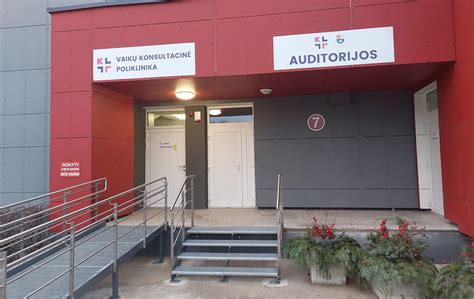
Vaikų konsultacinė poliklinika įsteigta 1997 m. kaip vaikų infekcinių ligų konsultacijų skyrius.
Vaikų konsultacinėje poliklinikoje teikiamos specializuotos antrojo lygio ambulatorinės paslaugos Kauno miesto, Kauno ir kitų regionų vaikams.
Pas mus kasmet apsilanko 11-12 tūkst.
Atliekami tyrimai ir teikiamos konsultacijos:
- Atliekami sudėtingi biocheminiai, imunologiniai, mikrobiologiniai tyrimai, ezofagogastroduodenoskopija, ultragarsinis bei radiologinis ištyrimas (kompiuterinė tomografija, magnetinio rezonanso tomografija).
- Ligoniams atliekami bakteriologiniai, imunologiniai, alerginiai, radiologiniai, endoskopiniai tyrimai.
- Juos konsultuoja visi vaikų ligų specialistai bei LSMU Vaikų klinikos docentai.
- Konsultuoja, tiria ir gydo ūmias ir lėtines ausų, nosies ir gerklės ligas. Taiko konservatyvų ir operacinį gydymą.
- Konsultuoja, tiria ir gydo ūmias ir lėtines kvėpavimo organų sistemos ligas ir būkles.
- Konsultuoja ir tiria vaikus dėl širdies ūžesių, galimų komplikacijų persirgus ūmiomis infekcinėmis ligomis.
- Konsultuoja ir tiria vaikus dėl probleminės, sutrikusios mitybos, infekcinės kilmės ir maisto alergijų sukeltų viduriavimų, lėtinių skrandžio ligų, infekcinio hepatito. Gali būti atliekami virškinamojo trakto endoskopiniai ir echoskopiniai tyrimai.
- Fizinės medicinos ir reabilitacijos gydytoja konsultuoja dėl vaikų raidos sutrikimų, neurologinių, traumatologinių, ortopedinių, uždegiminių ligų. Konsultuoja vaikus dėl galvos ir nugaros skausmų, miego sutrikimų, neaiškios kilmės priepuolių, judesio sutrikimų. Sergantiems infekcinėmis ligomis atliekamas neurologinis ištyrimas.
- Atlieka kūdikių nuo 1 mėnesio amžiaus galvos smegenų ultragarsinį tyrimą.
PAEDIATRIC CRITICAL CARE (SECTOR)
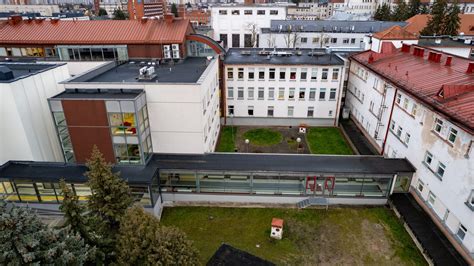
The sector consists of the Paediatric Intensive Care Unit (PICU) and the Paediatric Emergency Room (PER). The aim is to provide modern and first-class care to critically ill patients and to consult every child who seeks our help.
The PICU history can be traced back to 1977. In 1995, the current unit underwent a major renovation under the project funded by the Swiss government. At present, the PICU has 8 modern beds and treats 1,200 patients annually.
The PER has been operating in its current premises since 1999. 25,000 patients visit the PER and receive care every year.
Following respective transformations, the current PER provides emergency consultative care, emergency medical care for children, and the monitoring service.
Besides the clinical work, the Department carries out research focusing on severe bacterial infection (SPROUT international study on the prevalence of paediatric sepsis, risk assessment of severe bacterial infection in febrile children, s.aureus infection study), modern surveillance of healthcare-associated infections (HAI) (Lithuanian data summary, INICC registry, colonisation of lower respiratory tract of artificially ventilated patients with pathogenic micro-organisms), and trauma (severe brain injury, therapeutic hypothermia, development of a paediatric trauma registry).
Residents of the Department of Paediatrics, Paediatric Surgery, Family Medicine, Anaesthesiology, Intensive Care, and students are trained in the sector.
PAEDIATRIC NEPHROLOGY (SECTOR)
The Paediatric Nephrology sector was established in 1996, when the majority of specialised clinical departments started to organise their activities in sectors. The Paediatric Nephrology team consists of highly qualified specialists who carry out all diagnostic, therapeutic, scientific, and pedagogical tasks in their respective fields.
Since its establishment, the Paediatric Nephrology sector has been headed by Associate Professor Birutė Pundzienė, a paediatric nephrologist. All doctors of the sector treat patients in the inpatient unit, and provide outpatient consultations in the Paediatric Outpatient Unit and all paediatric units of the clinical departments.
PAEDIATRIC PULMONOLOGY (SECTOR)
The Pulmonology sector operates in the following areas: Outpatient patient consultation at the Paediatric Outpatient Unit, Inpatient examination and treatment of pulmonology patients, Pedagogical work, Research.
The Paediatric Outpatient Unit and the Inpatient Unit of the Department of Paediatrics boast a highly qualified specialist team including paediatric pulmonologists and paediatric pulmonologists-allergists who provide consultations children from all over Lithuania.
The sector treats more than 1,000 children a year, and consults about 3,000 children with respiratory and allergic diseases at the Outpatient Unit.
It also provides follow-up and treatment of patients with severe chronic lung diseases such as uncontrolled asthma, cystic fibrosis, and other suppurative and interstitial lung diseases.
The diagnosis and treatment of respiratory diseases in children are performed using all the technical resources available at Kauno Klinikos: Comprehensive allergy testing in infants and children is performed for the identification of the allergic nature of respiratory diseases. Skin prick tests for inhaled allergens, serum specific IgE antibody tests for food and inhaled allergens, and nasal cytology are performed.
Children’s respiratory function is tested using the Vmax computerised equipment that meets the global quality standards. The spirometry, bronchial provocation and dilation samples tests are performed for children aged 7 and older. In addition to the routine tests, lung volume, alveolar-capillary diffusion, and respiratory muscle strength can also be tested.
These tests are very important for children with chronic lung diseases. For young children aged 3-7, respiratory function can be assessed using the Jaeger MasterScope spirometer, specially designed for younger children, and the Impulse Oscillometry (IOS) method, which does not require the active cooperation from the children during the test.
Experienced specialists carry out advanced bronchological examinations. Diagnostic and therapeutic bronchoscopy procedures at the Department of Paediatrics are performed on infants and children of all ages.
Our specialists at the Department of Paediatrics also perform the latest radiography tests (CT, NMR, PET, contrast radiography, and radioisotope scans). Ultrasound tests are also widely used.
Procedures such as pleural aspiration and drainage, or transbronchial biopsy (TBLB) or transthoracic biopsy of lung tissue, can also be performed using various imaging techniques.
For the most accurate diagnosis and the best possible treatment of respiratory diseases in children, we work closely with other specialists, including ear-nose-throat (ENT) doctors, paediatric surgeons, oncologists, neurologists, immunologists, radiologists, microbiologists, and geneticists.
For the diagnosis of acute and chronic pulmonary and allergic conditions, the full potential of Kaunas Klinikos’ laboratories is utilised. This enables the performance of complex biochemical, immunological, and microbiological tests for children.
In order to provide specialised pulmonology care for children with chronic respiratory diseases, the Department of Paediatrics has established the Centre of Paediatric Chronic Respiratory Diseases. The Centre investigates, treats and continuously monitors patients with cystic fibrosis and other chronic suppurative and interstitial lung diseases.
The use of the latest respiratory care tools, such as cough-assist devices and chest wall oscillation devices (vests), enables us to provide quality respiratory care and treatment for these patients.
Close collaboration with paediatric intensive care doctors and paediatric neurologists has led to the development of care for children with neuromuscular diseases. The LSMU Department of Paediatrics is the only establishment of this kind in Lithuania to adapt and assure long-term non-invasive ventilation (NIV) at home for the paediatric patients.
Our highly qualified specialists’ knowledge and extensive diagnostic capabilities enable us to diagnose and effectively treat not only common children’s respiratory diseases, but also rare and complex conditions. 6 doctors working within this sector hold Doctor of Medicine scientific degrees in paediatric pulmonology or allergy and have completed their fellowships in hospitals in Europe and the USA. They are well-known specialists in the country, leading research work, developing guidelines for the diagnosis and treatment of children with lung and allergic diseases, and presenting papers at national and international conferences.
The paediatric pulmonologists are actively involved in international research projects on respiratory diseases in children. The results of the ISAAC and SPACE international projects, investigating the prevalence of allergic diseases and the prevention of asthma, are well-known not only in Lithuania but also in Europe.
The Pulmonology sector is also actively engaged in teaching activities. Over 300 students study paediatric respiratory diseases at this sector annually. Resident doctors are trained under the Paediatric Medicine and Paediatric Pulmonology residency Programme. Specialists in paediatric pulmonology and family doctors from all over Lithuania visit the sector to enhance their knowledge and pursue continued professional development in paediatric pulmonology.
PAEDIATRIC ALLERGOLOGY (SECTOR)
Children with the most severe allergic diseases are treated in the Inpatient Unit and consulted at the Paediatric Outpatient Unit. Children with allergic diseases are consulted by highly qualified specialists, many of whom have completed PhDs in paediatric pulmonology or allergology.
The diagnosis and treatment of paediatric diseases in children are performed using all the technical resources available at LSMU Kauno Klinikos. Comprehensive allergy tests is available for infants and children, including the skin prick tests and blood specific IgE antibody tests for food and inhaled allergens, skin patch tests for food allergens, nasal cytology, and comprehensive lung function tests.
Severe patients may be treated using plasmapheresis. Children with frequent conditions are tested for possible immunodeficiency and, in case of a positive diagnosis, are treated with monthly intravenous immunologlobulin (IVIg) therapy.
Doctors working within the sector participate in the publication of national methodological guidelines and textbooks for students on the diagnosis and treatment of the most common allergic diseases in children. They regularly give lectures at national scientific conferences and actively participate in international scientific projects (ISAAC, SPACE, 7BPHELIX) dealing with the prevalence of paediatric allergic diseases and the subsequent factors that lead to the increase in the prevalence of these diseases.
The sector is also actively engaged in the pedagogical work: lectures are given to 5th year students, paediatric and family doctors pursuing continued professional development, and residents.
PAEDIATRIC UNIT II
Paediatric Unit II includes paediatric cardiology and rheumatology, paediatric oncohaematology, and paediatric gastroenterology sectors.
PAEDIATRIC CARDIOLOGY AND RHEUMATOLOGY SECTOR
The clinical activities encompass outpatient and inpatient care. The sector consults and treats children with congenital and acquired cardiovascular diseases. Our team has extensive experience in diagnosing heart rhythm disorders and providing treatment for children of all ages.
Non-invasive cardiac conduction system (CCS) examination through the oesophagus are available, and can be performed in older children on an outpatient basis. Intracardiac invasive cardiac conduction system examination and transcatheter radiofrequency ablation of arrhythmogenic foci for the treatment of cardiac rhythm disorders are performed.
The doctors working within the sector perform the diagnostics of congenital heart defects, cardiac ultrasound on patients in all paediatric units, including neonates, and coordinate emergency cardiac surgery when required.
The sector treats children with joint and systemic connective tissue diseases. The latest biologic therapies - etanercept, adalimumab, infliximab - are used. Treatment is performed using with intra-articular glucocorticosteroid injections.
RESEARCH AND EDUCATION
The sector regularly has 1 or 2 paediatric cardiology residents recruited and in training and is anticipating to provide training for a prospective paediatric rheumatology resident. The residents are given lectures and trained in practical procedures. The 5th and 6th year students carry out research work in paediatric cardiology and rheumatology, and present their work at the conferences held by the Students’ Scientific Society.
PAEDIATRIC ONCOLOGY AND HAEMATOLOGY SECTOR
Treatment of children with malignant tumours was initially launched at the Paediatric Unit II of Kauno Klinikos of the LSMU Hospital in 1997. The first paediatric oncology and haematology beds (10 beds) were set up in 2005, while a new 15-bed paediatric oncology and haematology unit was established in 2012 as part of the Paediatric Unit II.
Children with blood and haematopoietic diseases receive outpatient consultations every day at the Paediatric Haematology Room of the Paediatric Outpatient Clinic.
The Paediatric Oncology and Haematology sector consists of a team of paediatric haematologists, paediatric haematology nurses, a psychologist, a social worker, and a rehabilitation therapist.
ACTIVITIES
- Blood and hematopoietic disorders in paediatric patients
- Malignant tumours in paediatric patients
- Central nervous system tumours
We are members of the Nordic Nordic Society of Paediatric Haematology and Oncology (NOPHO), Lithuanian Society of Paediatric Haematology and Oncology, and the Lithuanian Society of Haematology.
PAEDIATRIC GASTROENTEROLOGY SECTOR
Dr. R. Rokaitė has completed her residency in dietetics and consults patients on dietetic issues at the Department of Paediatrics and other departments of Kaunas Klinikos.
The sector is involved in clinical, educational, and research work, developing and introducing new methods for the treatment and diagnosis of gastrointestinal diseases in children.
Assoc. Prof. R. Kučinskienė has conducted research studies to determine the role of H. pylori infection in the pathology of gastrointestinal diseases in children, and has provided guidelines for the diagnosis and treatment of these diseases in children.
Currently, the focus is placed on the examination and treatment of children with chronic inflammatory bowel disease (IBD), a paediatric registry of IBD in Kaunas region is kept, and the latest methods of treatment with immuno-modulators and immuno-sorbtion are applied.
Ultrasound, oesophagogastroduodenoscopy (OGD), colonoscopy, and endoscopic retrograde cholangiopancreatography (ERCP) are widely used to diagnose gastrointestinal diseases, while liver diseases are diagnosed using targeted liver biopsy, CT scans, and magnetic resonance imaging.
New diagnostic methods for children with food allergies are performed. Dr. R.Rokaitė performs skin patch tests for major food allergens.
The Department collaborates with the adult Department of Gastroenterology and pursues intensive teaching activities.
Vaikų ligoninė | Virtuali ekskursija | „KidVision“ ikimokyklinis ugdymas
Visais ištyrimo bei gydymo atvejais, išskyrus gyvybei grėsmingus, reikalingas asmens sutikimas.
Atvykstantiems hospitalizacijai rekomenduojama su savimi turėti asmens higienos priemones. Jeigu jūs norėsite ligoninėje dėvėti savo drabužius, jie turėtų būti švarūs ir tvarkingi. Pacientų elgesį ligoninėje reglamentuoja ligoninės vidaus tvarkos taisyklės.